
Opening Recognition
He asks from the doorway if she wants to go for a walk after dinner, the way they used to. It is a simple question. It is not a simple question. She is on the sofa, laptop balanced on a pillow, and she does not look up immediately. In that pause, the entire conversation happens. The calculation of pain levels, the negotiation with her own body, the memory of the last walk that ended badly, the desire to say yes, the exhaustion of having to explain a no. When she finally answers, it is a maybe, which is a no, and they both know it.
There is no argument. He nods, says okay, and leaves the room. But the space he leaves behind is filled with something dense and unspoken. It is the accumulation of a thousand such moments, of plans modified, of futures subtly shrinking. This is the texture of a relationship altered by the arrival of chronic pain. It is a quiet antagonist that has taken up residence not just in a body, but in the system of the relationship itself.
The Common Assumption
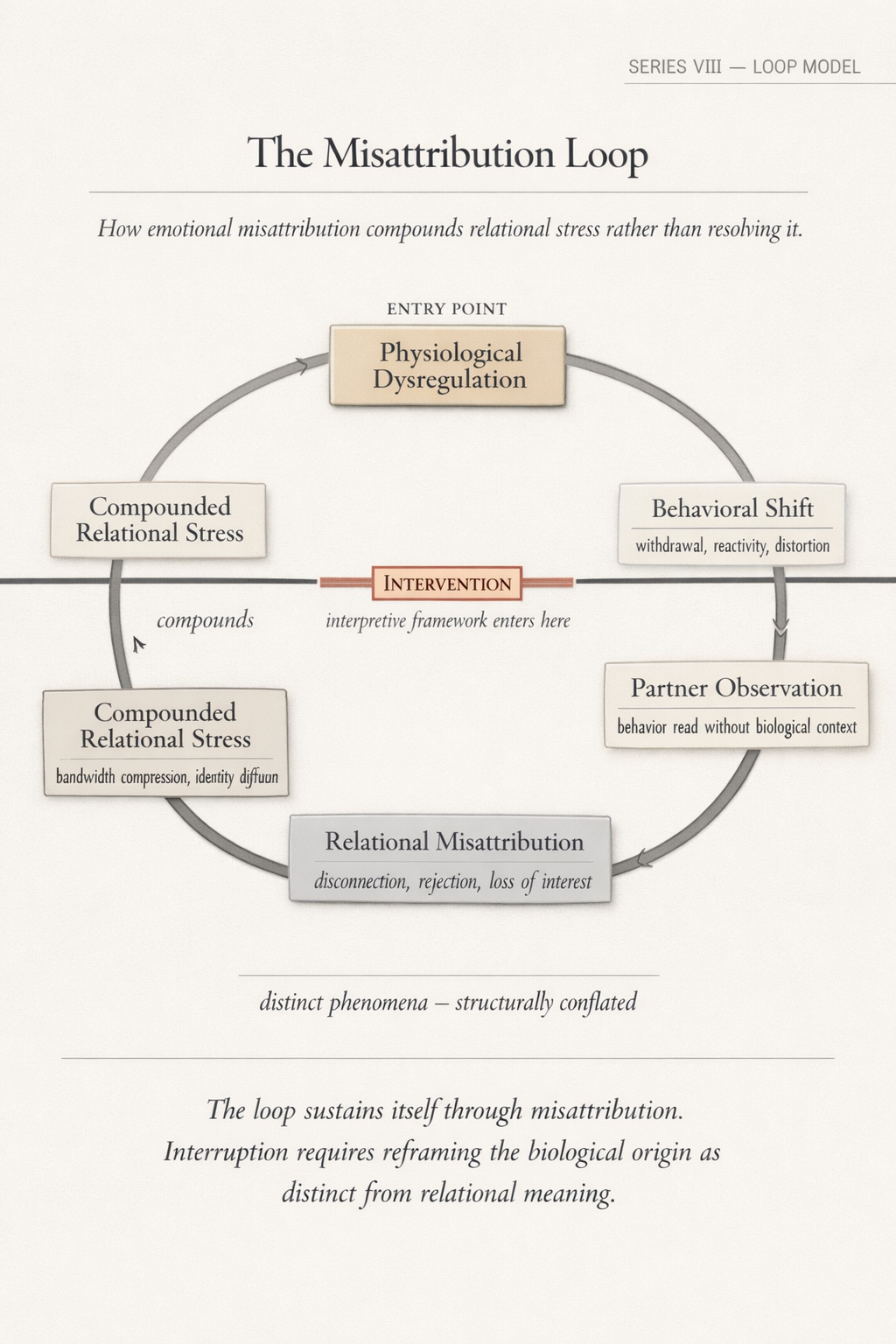
When a dynamic like this emerges, the interpretation is almost always behavioral. The person without pain feels a growing distance and reads it as withdrawal, resentment, or a lack of interest. They experience their partner as changed, less present, perhaps even selfish. The person in pain feels misunderstood, judged, and impossibly tired of being the reason things are different. They read their partner’s attempts to help as pressure, or their quiet acceptance as a lack of care.
From these positions, the problem is located in the other person’s character. He is not empathetic enough. She is defined by her pain. They are not communicating well. They need to try harder to understand each other. This is the standard narrative of relational strain. It is a story about individual failings, about two people who are no longer getting it right. It is also a fundamental misreading of the situation.
The Hidden System Dynamic
Chronic pain is not a character flaw. It is a biological event with systemic consequences. When pain becomes a long-term resident in a life, it ceases to be a personal symptom and becomes a structural stressor on the relational system. Like a sudden financial crisis or the introduction of a high-needs dependent, it begins to draw resources away from other functions. The system, which once had enough capacity for spontaneity, generosity, and repair, is now operating under a state of permanent, low-grade emergency.
This is a condition of Relational System Stress. The system is overloaded. One of the first resources to be depleted is what can be called Emotional Bandwidth — the finite capacity to process nuance, extend generosity, and absorb the small frictions of daily life. Under the cognitive and physiological load of managing pain, this bandwidth narrows considerably. The same is true for the partner, who is now living with the secondary effects of the pain: the logistical management, the ambient worry, the loss of shared activities. The system itself has less to give.
Pain as a Systemic Load
What looks like a communication problem is often a capacity problem. The person in pain is not withholding engagement as a choice; their system is redirecting all available resources toward managing a debilitating internal state. The partner is not necessarily becoming less patient; their own reserves are being spent on watching someone they love suffer. Misinterpretations flourish in this environment not because people have become less caring, but because the cognitive and emotional energy required for accurate interpretation is no longer consistently available. The system is running hot. Its processing is degraded.
Pattern Development
Over time, an overloaded system will often organize itself into a predictable, if dysfunctional, pattern. The most common is a complementary dynamic of Overfunctioning and Withdrawal. One partner, often the one not in pain, begins to overfunction. They take on the research, manage the appointments, suggest new treatments, and try to engineer solutions. This is an act of care. It is also an attempt to control an uncontrollable reality.
In response, the partner experiencing the pain often withdraws. The constant focus on their body becomes another source of exhaustion. They may feel less like a partner and more like a patient, a project to be managed. Their withdrawal is not a rejection of their partner, but a retreat from the pain and the apparatus that has grown up around it. This creates a feedback loop: the more one partner withdraws, the more the other overfunctions to bridge the distance, which in turn prompts further withdrawal. Both are trying to solve the problem. Their solutions are making it worse.
The Invisible Labor of Pain
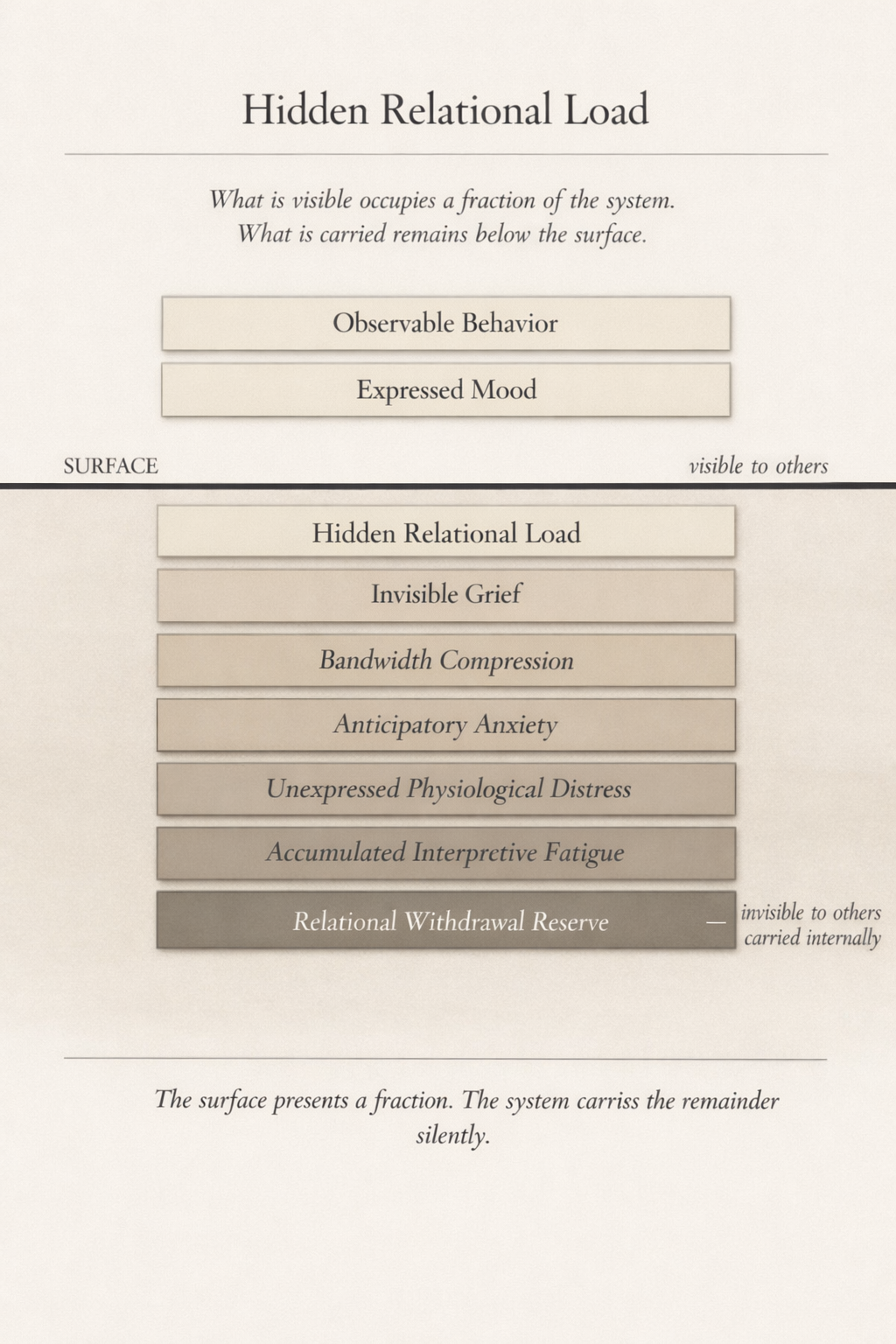
This pattern is sustained by a deep imbalance in Invisible Relational Load. We are accustomed to thinking of this load in terms of household chores or childcare. But the work of living in a body that is in constant or recurrent pain is its own form of intense, invisible labor. It is the work of calculating every move. It is the work of performing wellness for professional or social survival. It is the work of tracking symptoms and managing medication and navigating a medical system that is often dismissive. This is not work that can be delegated. It depletes the carrier in ways the system cannot see, leaving less of that person available for the relationship.
Why Traditional Advice Often Fails
The most common advice for couples in distress focuses on behavioral optimization: communicate more, listen better, schedule date nights, practice empathy. When a system is under the structural load of chronic pain, this advice will consistently fail. It is not because the advice is bad. It is because it presupposes the existence of resources that have already been consumed by the pain.
Asking a person whose emotional bandwidth is consumed by pain to “listen more actively” is like asking someone running a marathon to appreciate the scenery. Asking a partner who is consumed by worry and logistical management to “be more spontaneous” ignores the reality of their depleted state. This is an attempt at optimization before stabilization. It requires the system to perform at a higher level when it is already failing at a baseline level. The experience of this failure is demoralizing. It reinforces the belief that the individuals are the problem, when it is the sequence of the intervention that is wrong.
Stabilization and Reframe
The necessary shift is away from behavior and toward the system itself. This is not a relationship problem to be solved with better communication. It is a biological reality that the relational system was never designed to absorb without a new interpretation. The central task is not to fix the interaction, but to stabilize the system so that functional interaction can become possible again.
Stabilization is not about solving the pain. It is about reducing the load on the system. This can mean many things. It can mean radical acceptance of new limitations. It can mean creating explicit structures to manage the logistical burden of the pain, treating it like an administrative task rather than an emotional crisis. It can mean finding ways to connect that do not rely on the old, now-unavailable activities. The goal is to stop demanding that the system function as if the pain were not there. The goal is to adjust the system to the reality of the pain.
This reframe changes the question. Instead of asking, “Why are we failing to connect?” the question becomes, “Given the presence of pain, what is a sustainable way for this system to operate?” That is a different kind of problem. It does not promise a return to how things were. It opens a path toward finding what can be.
Closing Reflection
To understand that a relationship is buckling under a structural load rather than a personal failing does not make the load lighter. The pain is still there. The distance can still feel immense after a brief, tense conversation about dinner plans. The reframe from a behavioral problem to a system problem is an intellectual move. It does not always touch the emotional reality of the moment.
The pain itself is one kind of loss; what happens to the space between two people is another.
There is some utility in knowing that the dynamic is a predictable response to an impossible situation. It can, sometimes, quiet the narrative of blame that runs in the background of a stressed system. But this knowledge does not restore depleted emotional bandwidth. It does not undo the patterns of overfunctioning and withdrawal that have been grooved into the relationship over months or years. It offers clarity, not a cure.
Recognizing the nature of the problem does not guarantee its solution. It merely ensures that you are working on the right problem.